
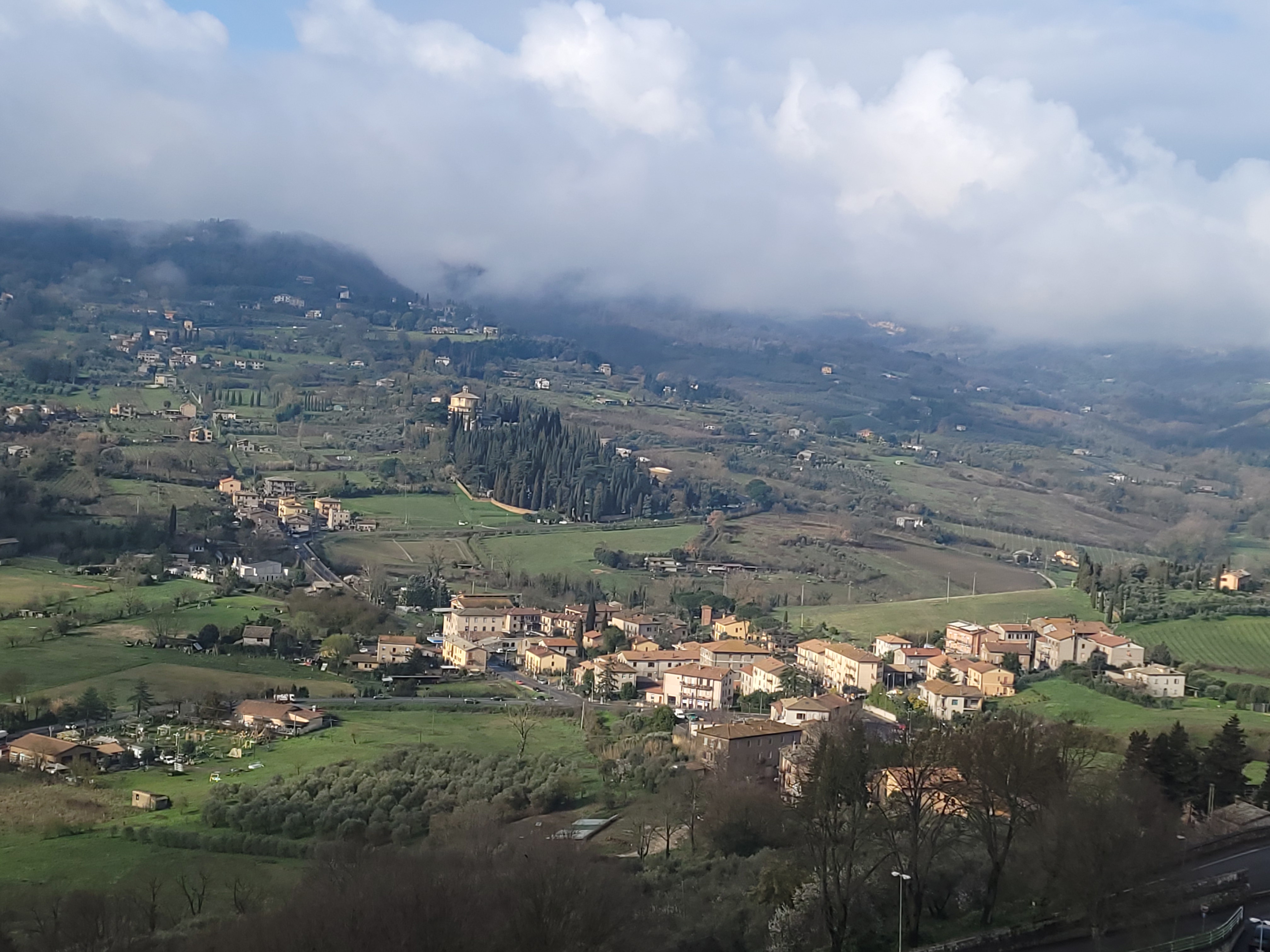
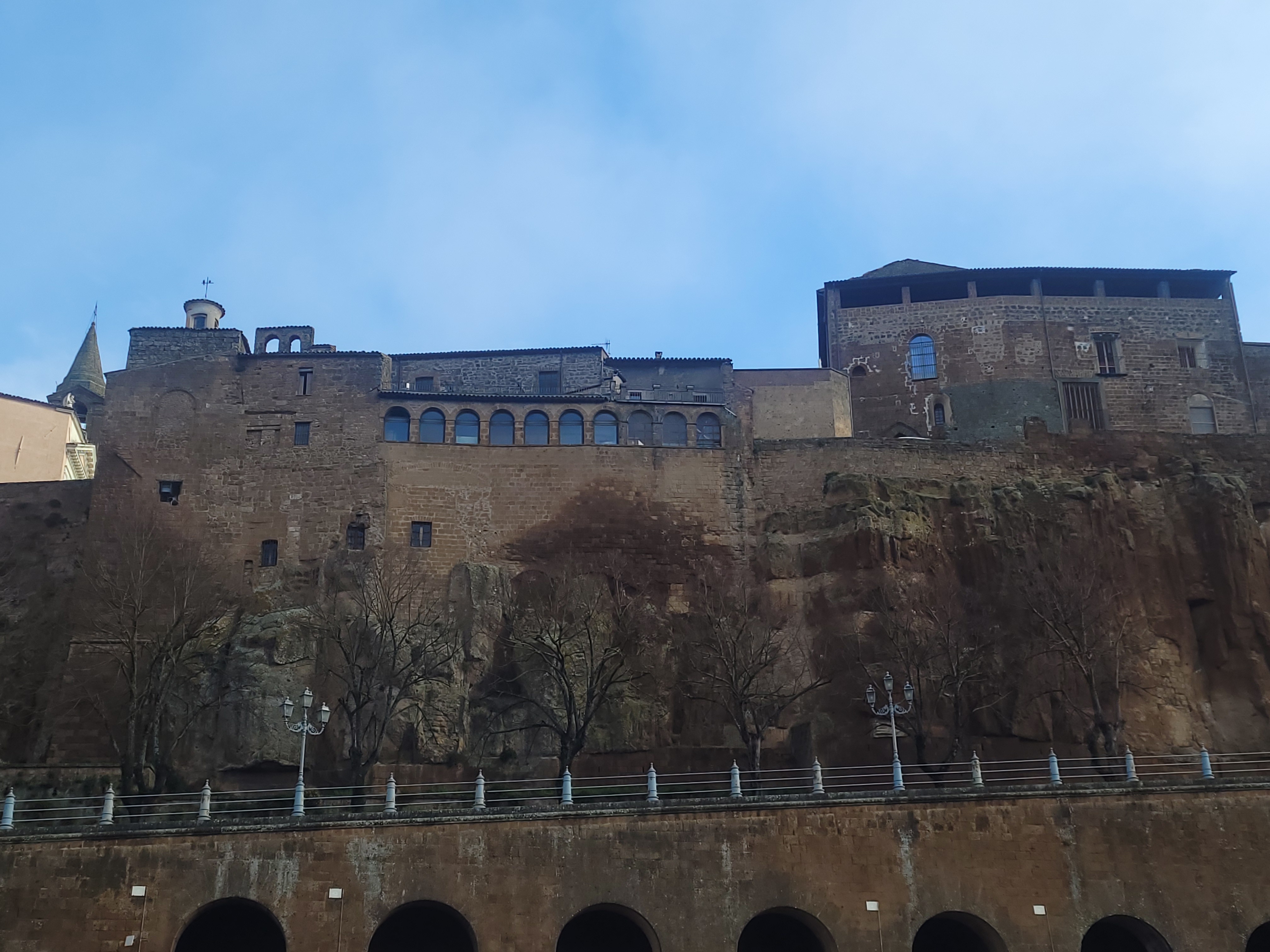
Orvieto was the first of many hilltop towns we would explore. From the outside, we could see the large walls surrounding the city. Using an elevator to reach the city we experienced the amazing views of the surrounding area below before walking to the center of the town.
Our guide (Begonia) explained the local history and took us around a building to the open square where the Cathedral of Santa Maria Assunta, or Orvieto’s Duomo stood. It…was…stunning.
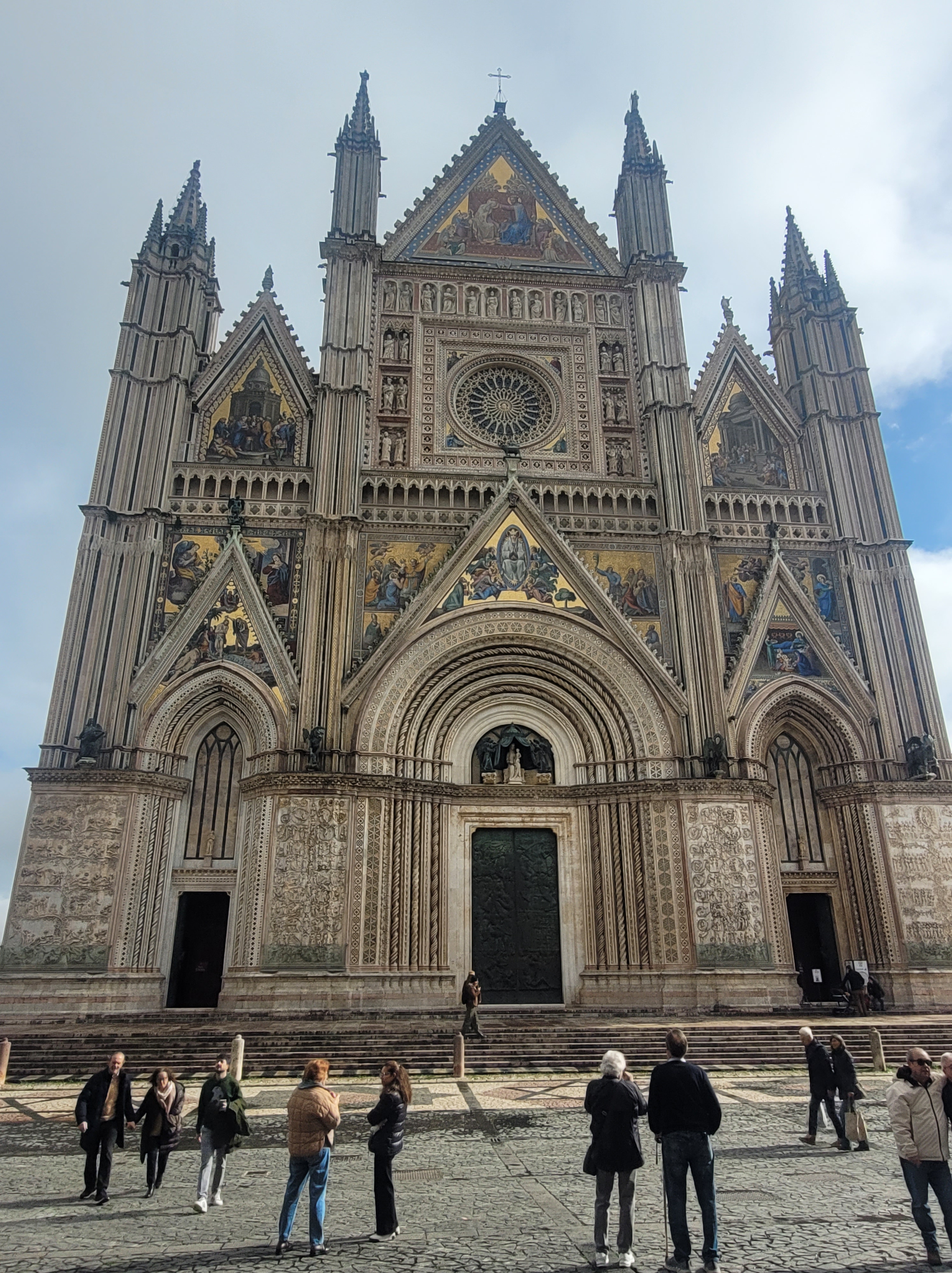
Churches were to be a large part of the Italian experience due to their heavy influence throughout history; we were never disappointed by any of these structures.
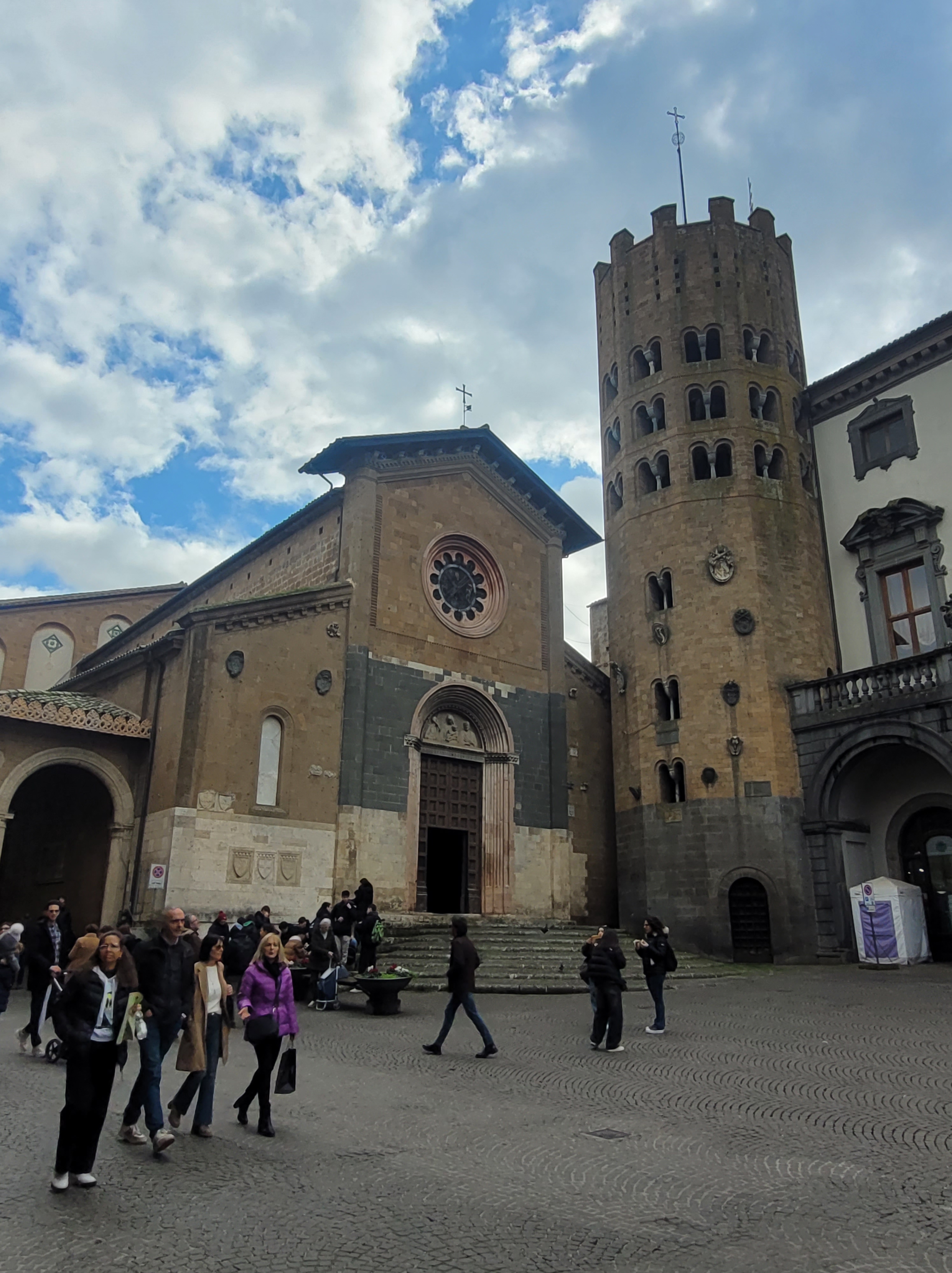
Before giving us time to explore individually, Begonia mentioned how good the local chocolates were, including one nicknamed “Pinocchio’s Nose.” It was made by a local café and chocolate shop, so naturally, I had to explore. The sweet in question was conical, wrapped in red foil, and filled with smooth chocolate with a hint of chili. I purchased enough for us all to try one and two other types. The silver-foiled chocolates were filled with pistachio chocolate cream, and the light pink foiled chocolates were filled with cinnamon chocolate filling. All were amazing and I was happy to trust Begonia’s recommendation.
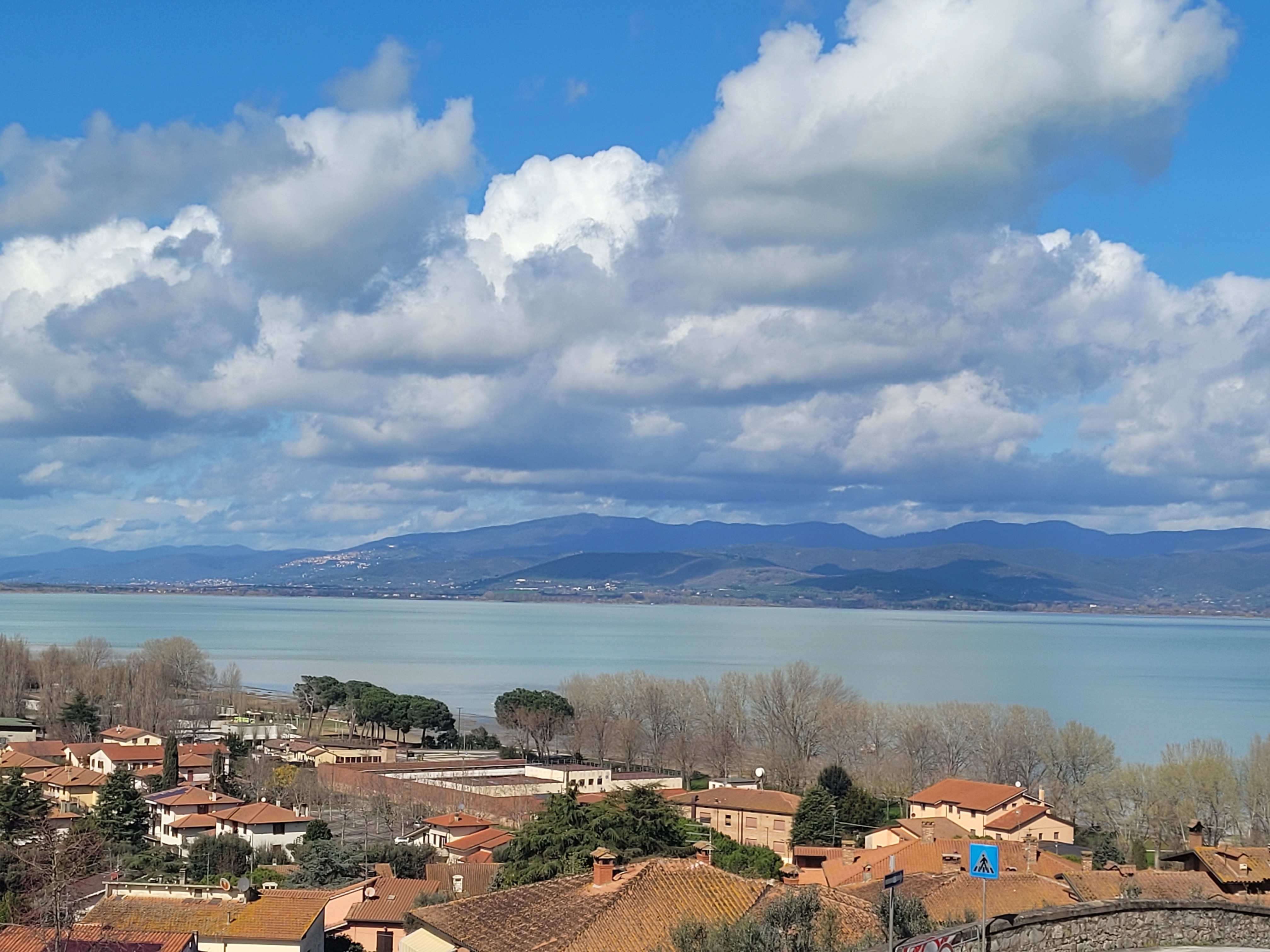
After about two hours on the bus, we stopped at Castiglione del Lago. Visitors could walk to the top of a large staircase to view the lake below. This stop included time for lunch so we found a place called Café Latino to eat. Afterward, we enjoyed walking around the small neighborhood streets before heading to our next destination.
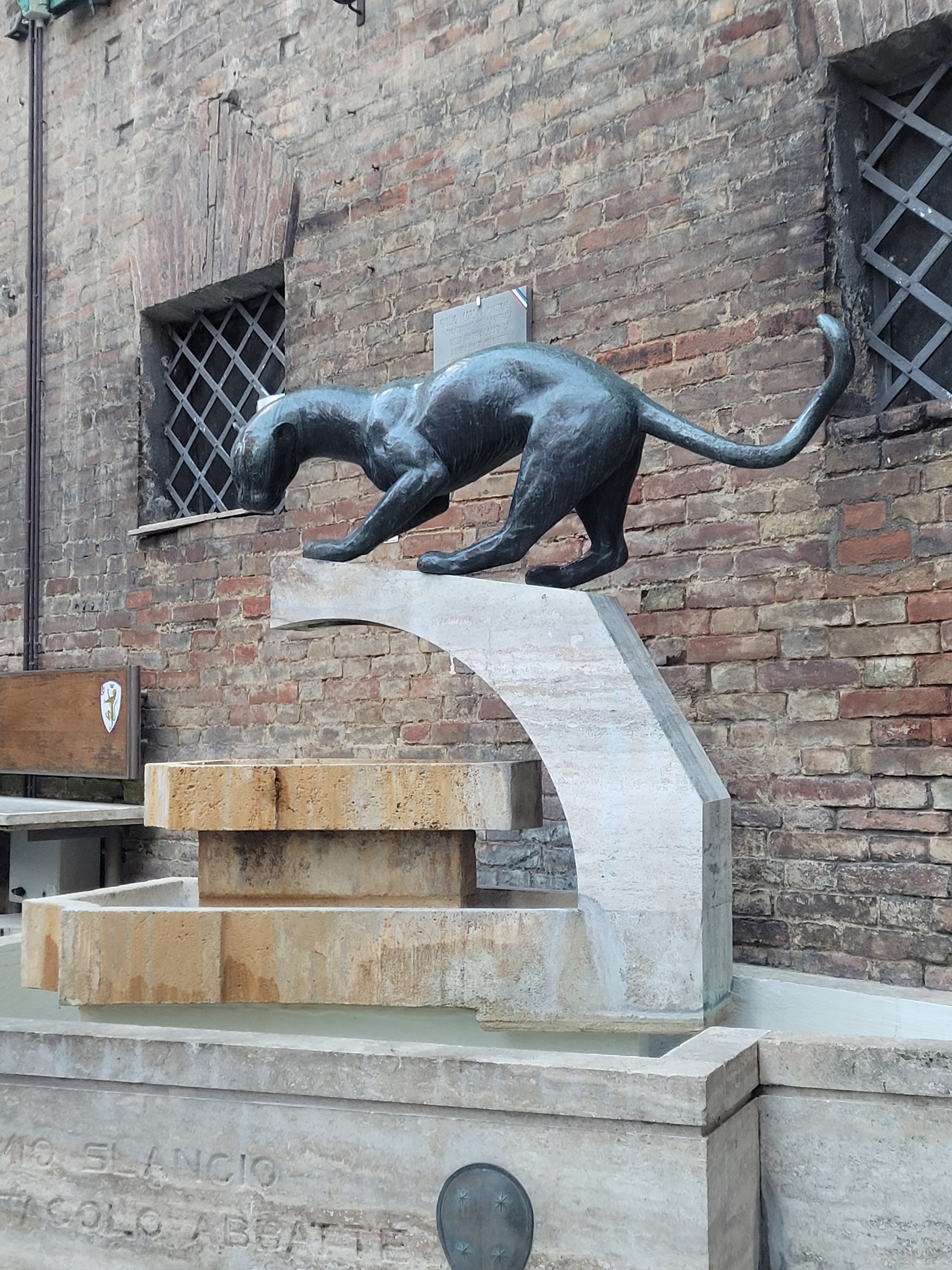
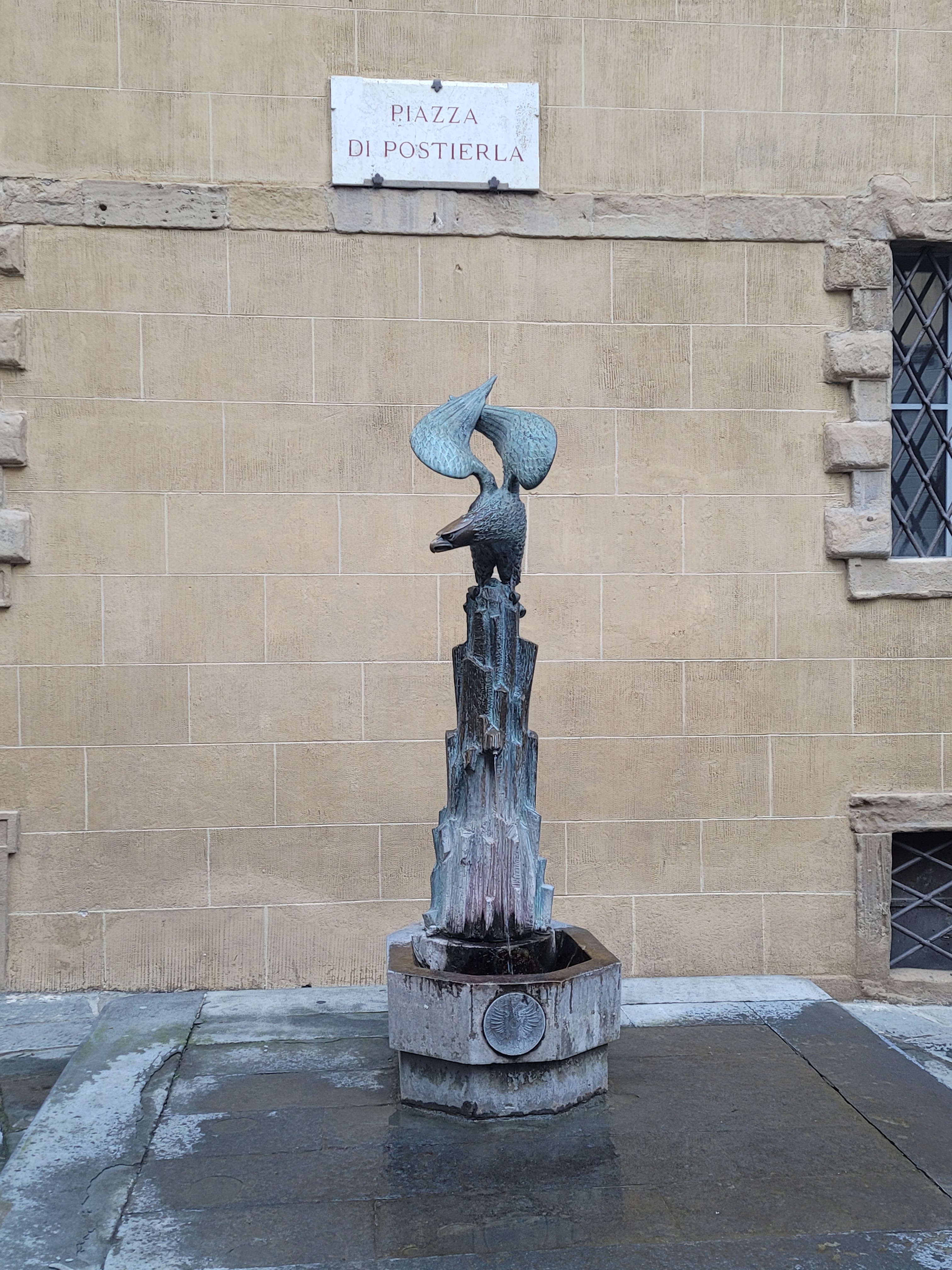
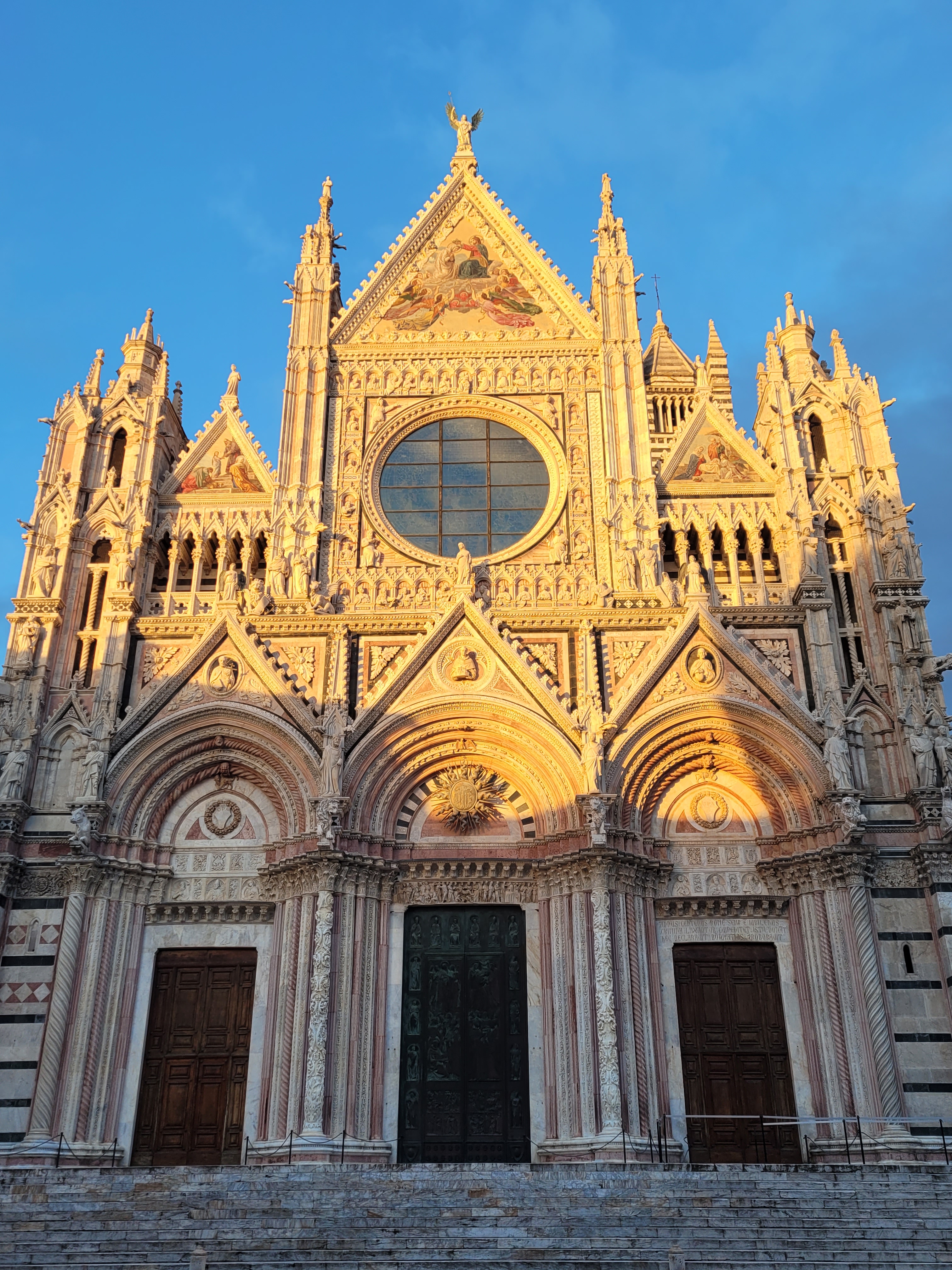
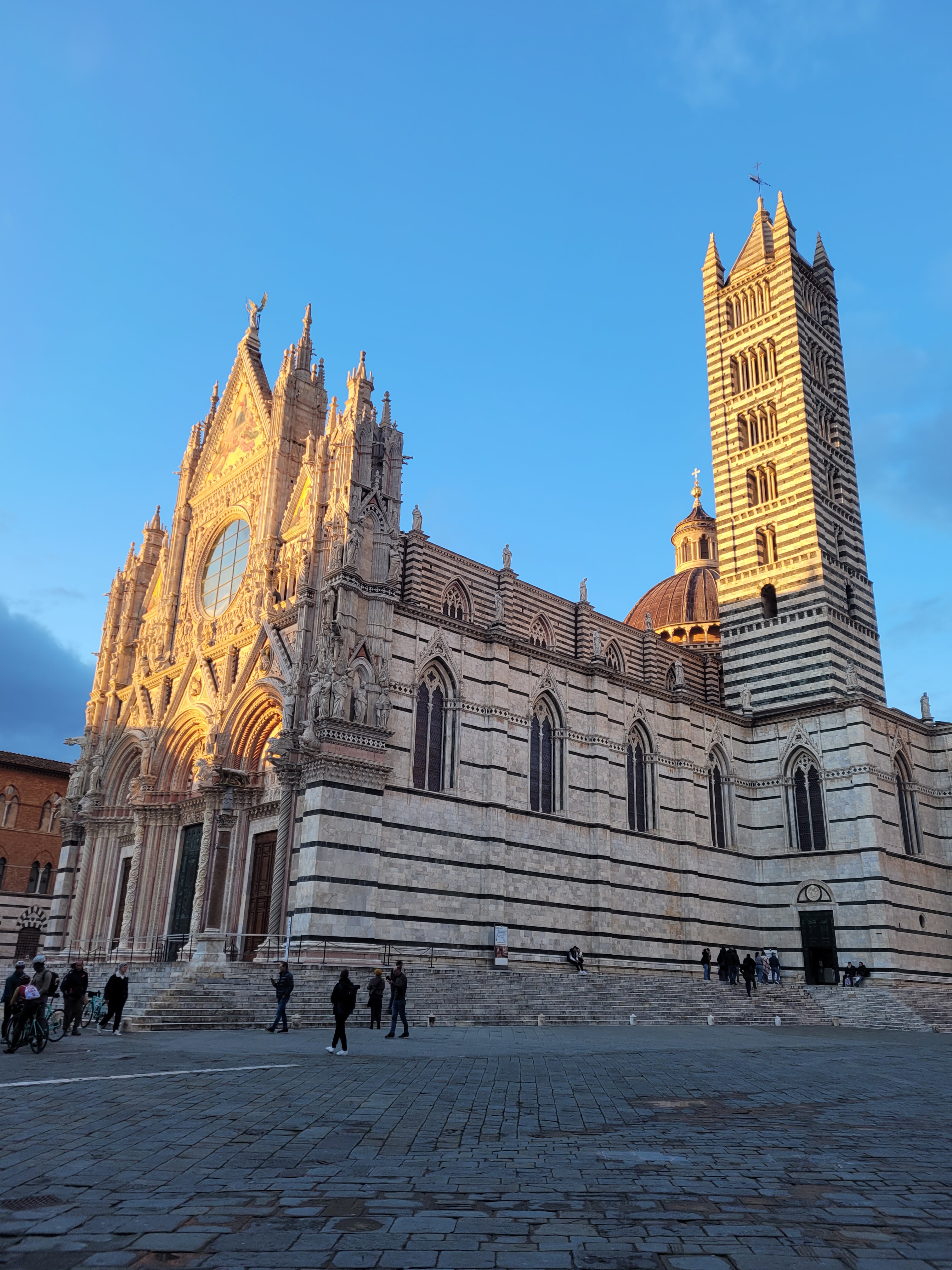
Siena was a pretty unique place. The city entrance had a large gate we needed to walk through and we learned that the city was originally composed of 17 small neighborhoods. Today the city has 12 neighborhoods, each continuing to use the animal mascot of bygone days. Images of these animals are featured on walls, on individual neighborhood flags, and in the form of a statue somewhere in each neighborhood. Ages ago the neighborhoods were enemies; today they are rivals who compete in an annual horse race which satisfies their struggle for power in the form of bragging rights.
As we made our way into the square, we saw a large crowd and heard loud music. Our guide explained there was a big bike race, so we managed to make our way into the center of the square to take a few photos of the church’s façade, but we didn’t hang around due to the overly crowded area.

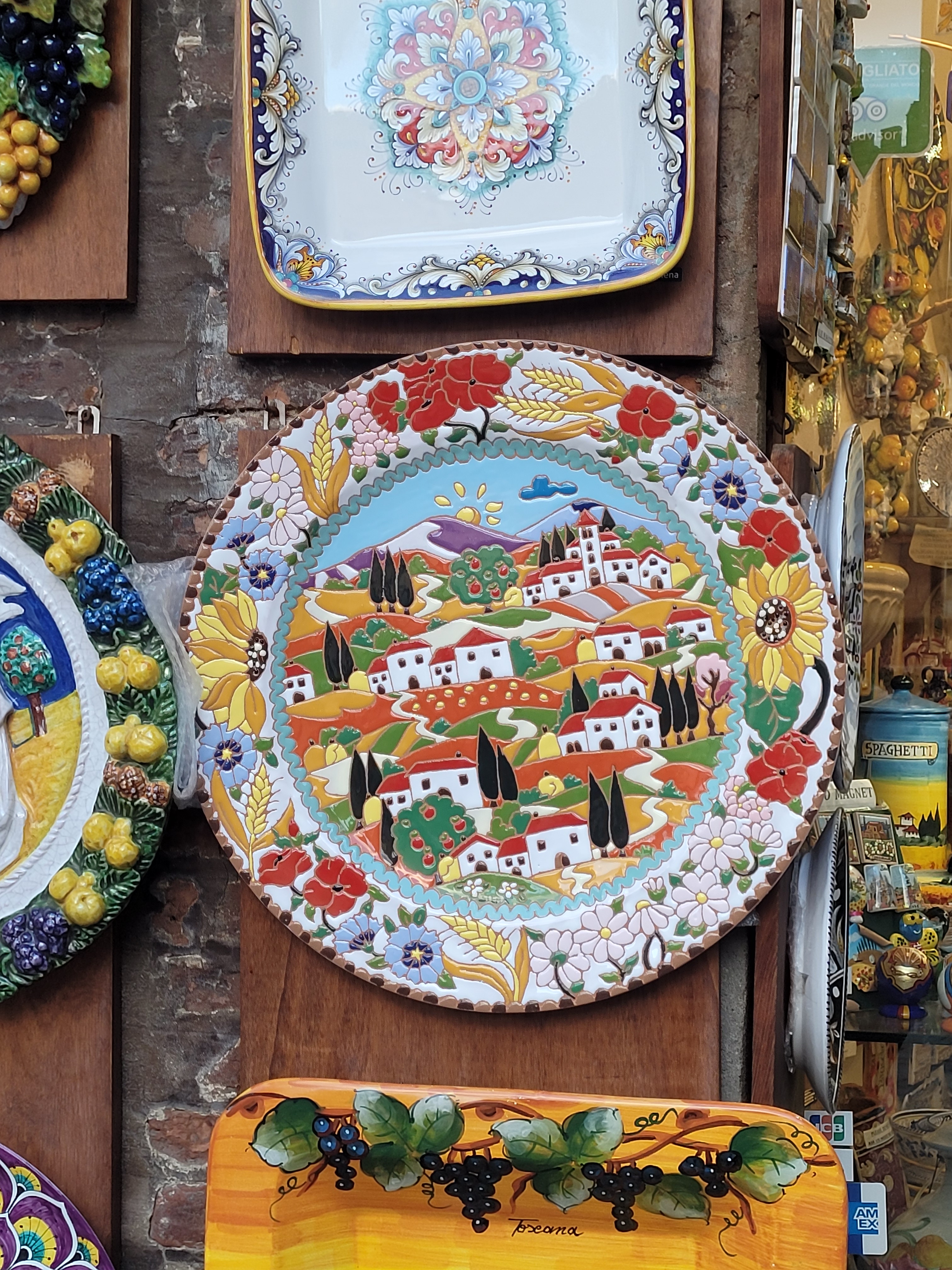
We did pop into many trinket shops selling beautiful painted ceramics. Siena is in Tuscany and we saw many forms of art featuring the iconic Tuscan landscapes that were simply beautiful.
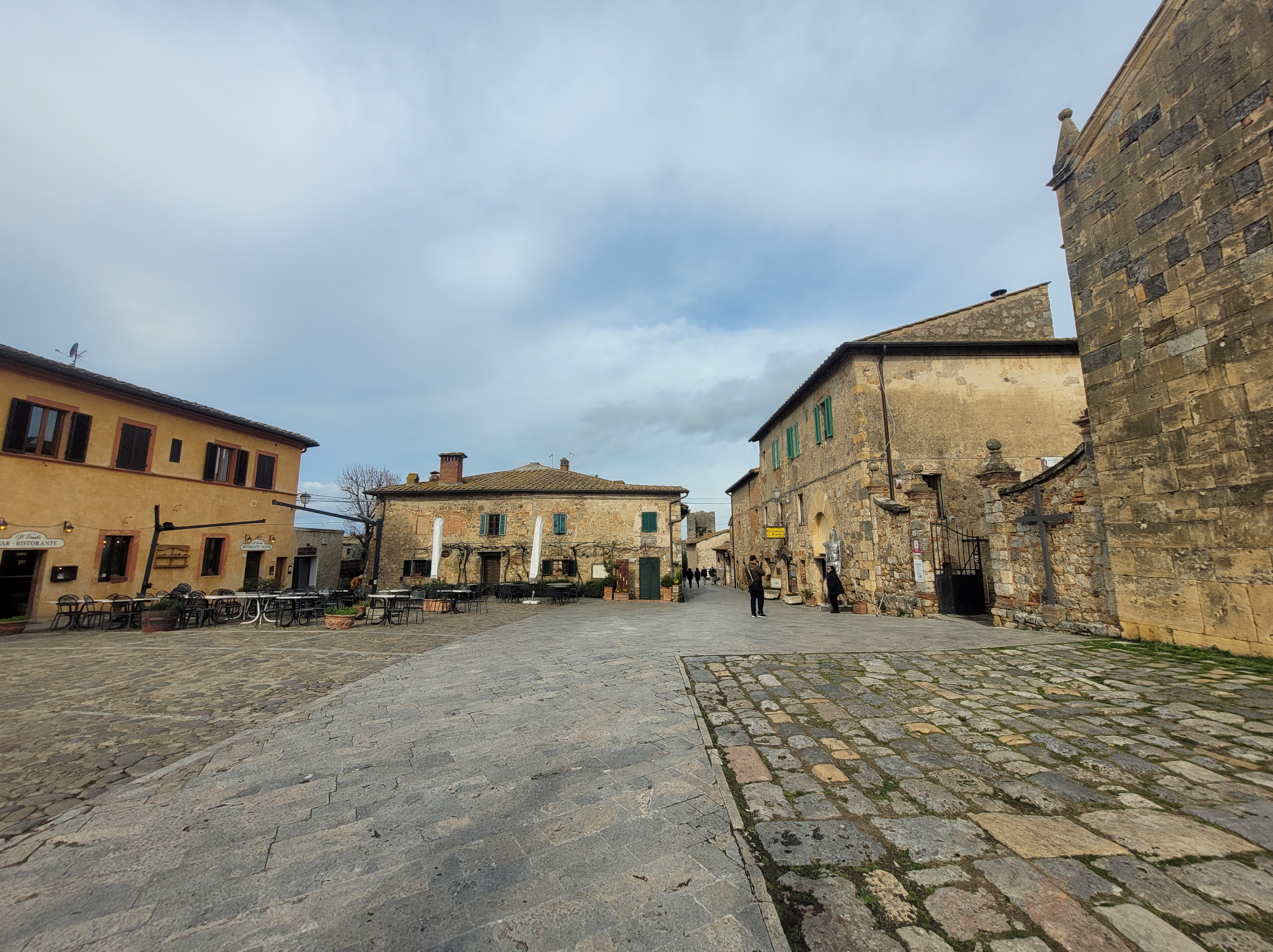
It was another chilly day, so we grabbed a hot drink to warm up before getting the bus to our local hotel. The next morning, we drove a short distance to Monteriggioni, a small medieval town that was completely intact. Dating back to the early 1200s, this town was used as a military fortification and has a complete wall surrounding it. A modern catwalk was added to part of the wall and visitors can pay a few euros to walk the wall and appreciate the view of the little town and the surrounding area beyond.
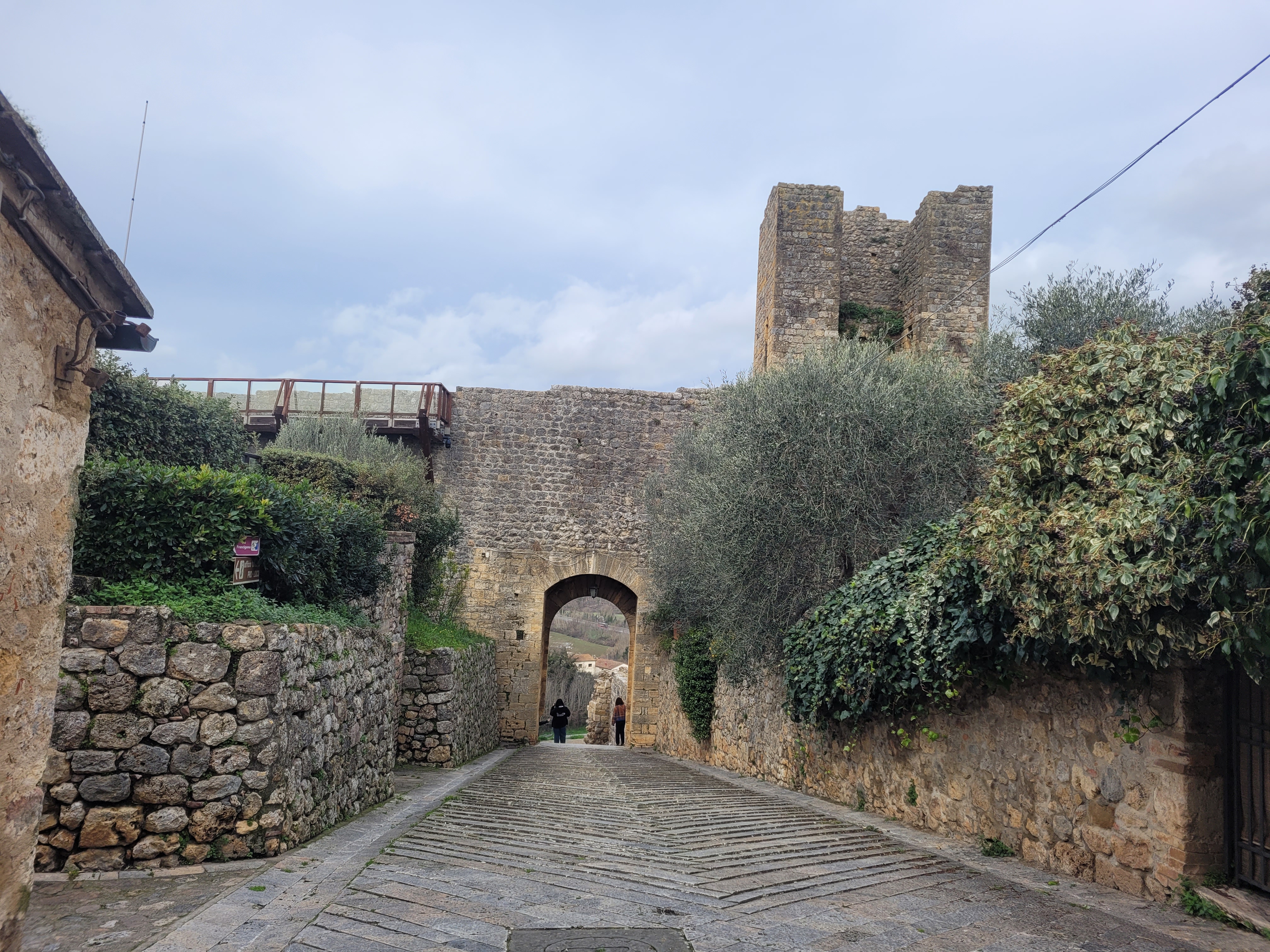
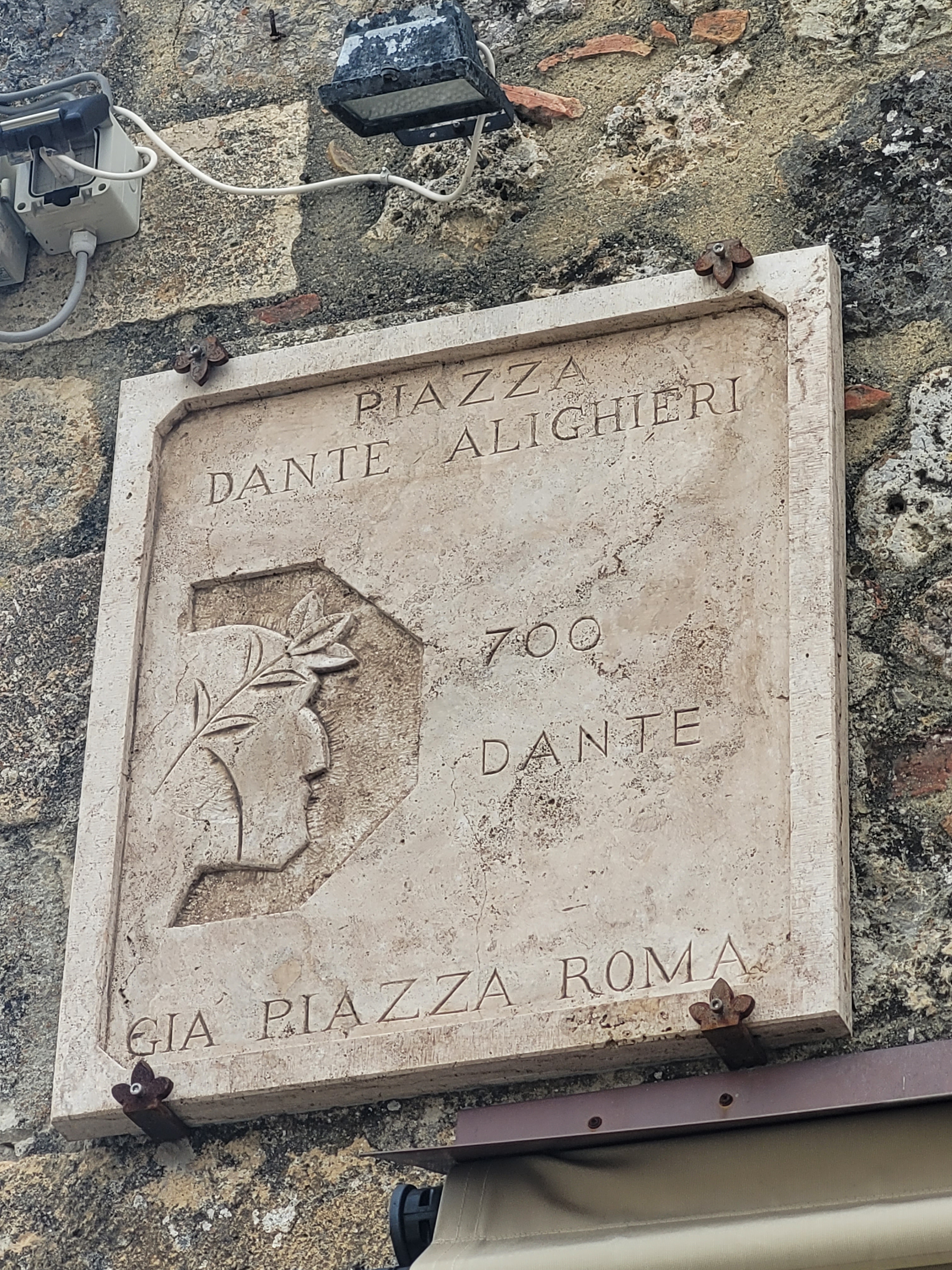
Considering this town has one street, it was impossible to get lost. Dante Alighieri also favored the town and stayed in a small apartment to write some of his works.
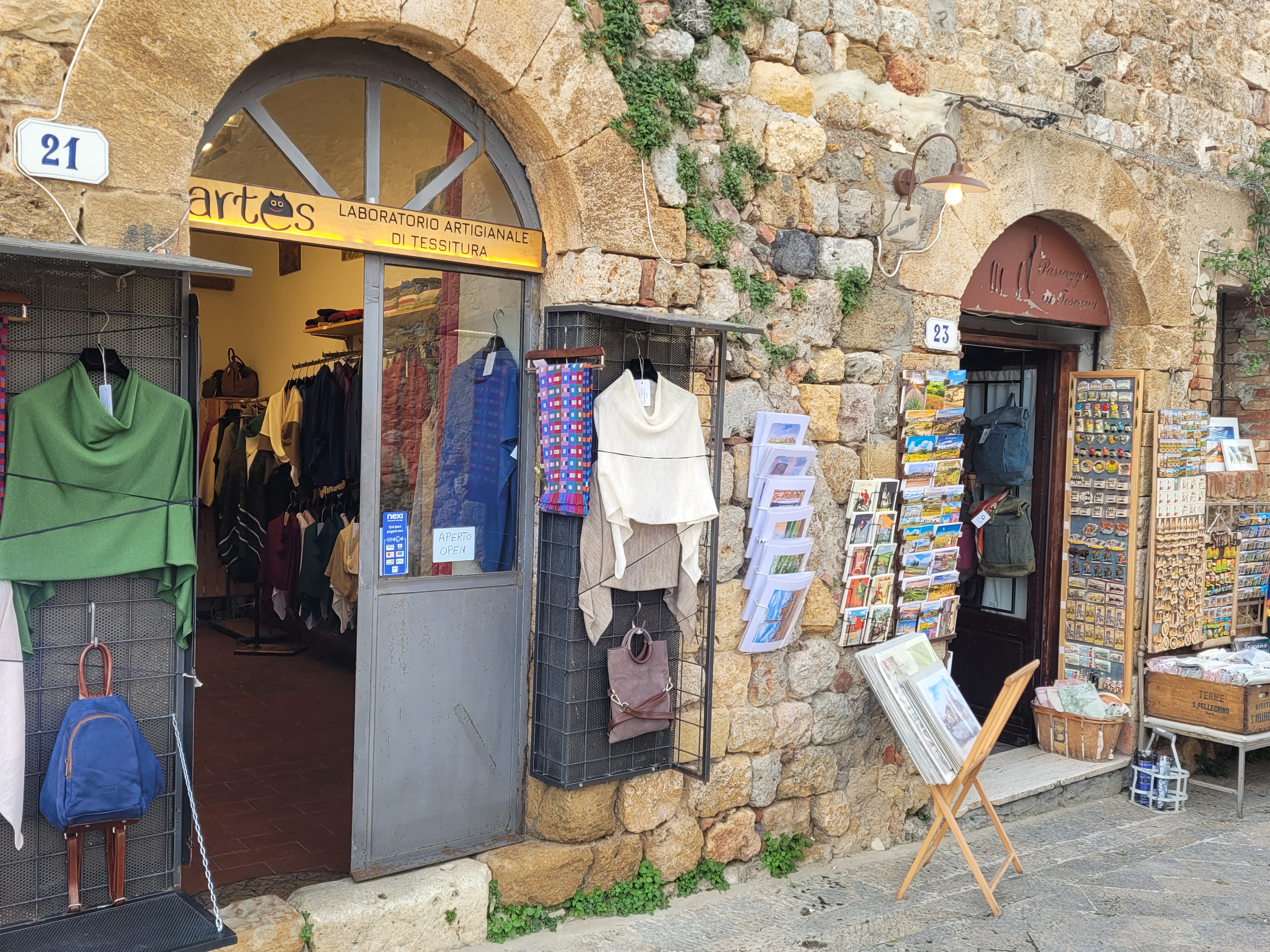
We saw many beautiful crafts including handmade woven scarves, ponchos, and accessories. One of the owners even let us watch a short weaving demonstration while we shopped. This little oasis was definitely worth the visit.
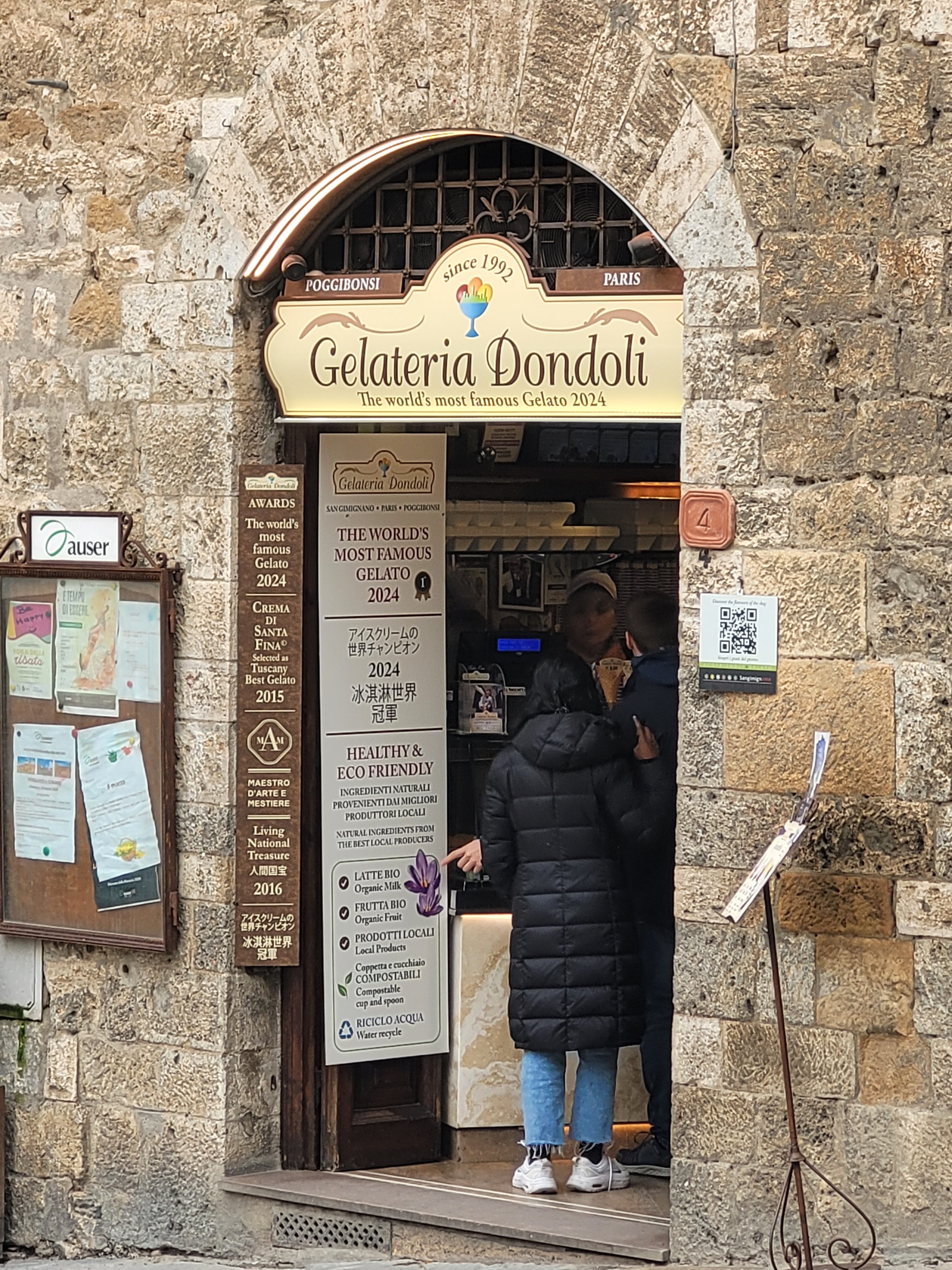
Back on the bus, we drove through areas covered in perfectly lined rows of olive groves and vineyards. After an hour of gorgeous scenery, we arrived in San Gimignano. Known for its roast pork and the “most famous gelato in the world,” this area is called the “Manhattan of the Middle Ages.” The families making up the hillside town constantly competed with each other regarding who could build the tallest towers on their property, demonstrating their wealth and power.
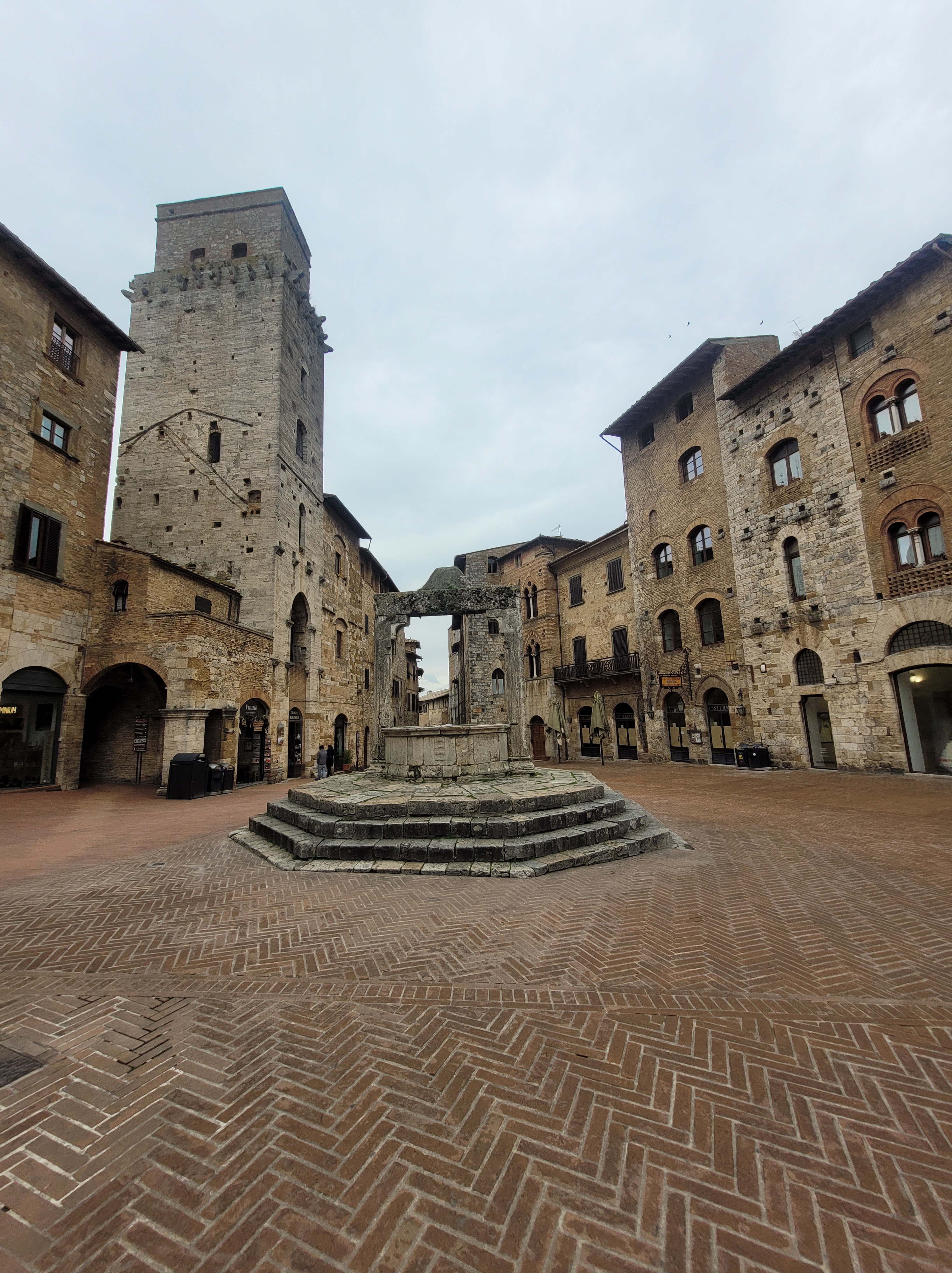
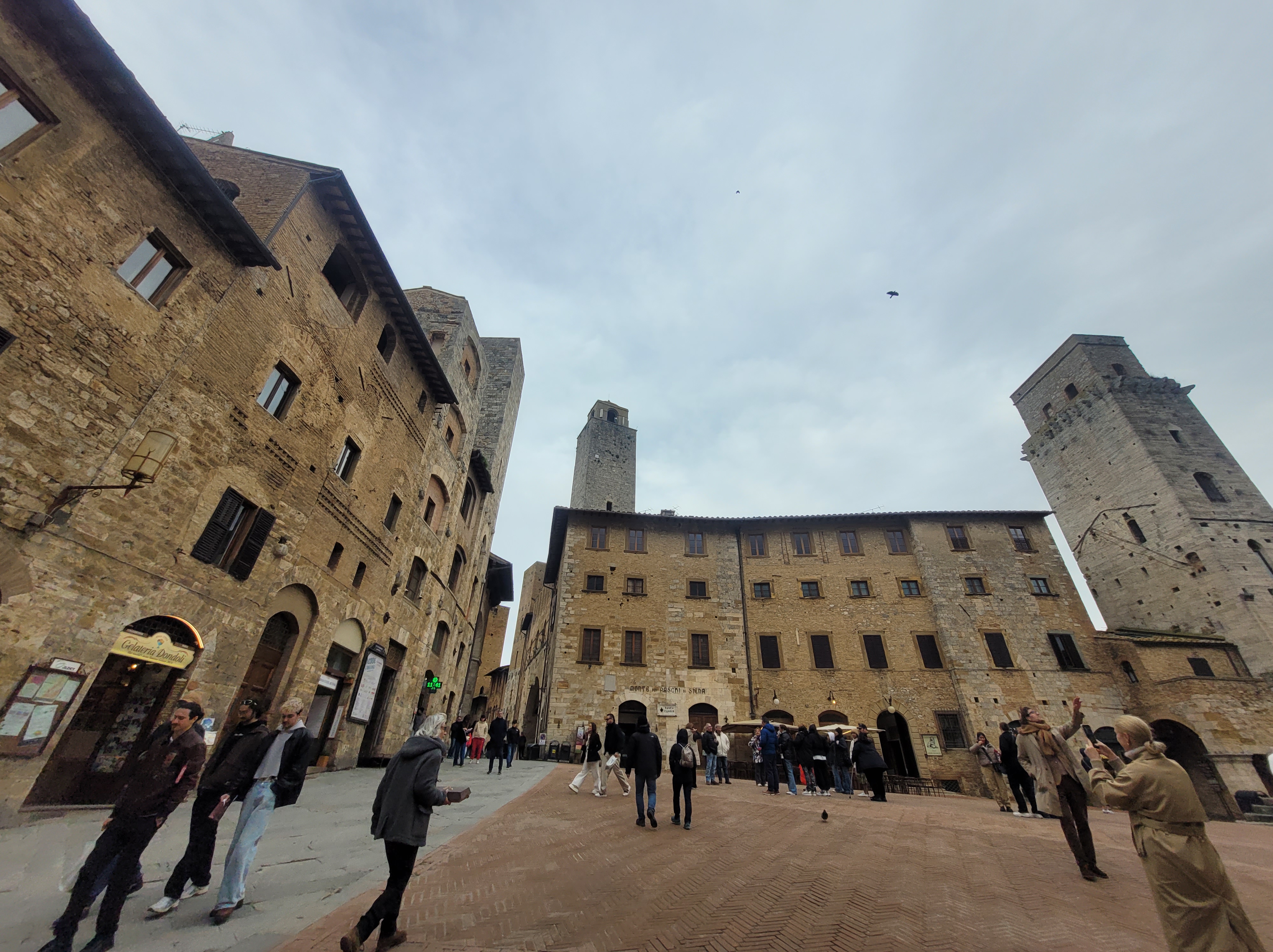
Today it remains a well-preserved town for visitors to explore before experiencing the award-winning gelato. Before our trip, we heard that we should evaluate gelato based on the pistachio they served. If the pistachio gelato was bright green, that meant the shop did NOT use all-natural ingredients. The pistachio in this town was medium green and all the flavors were delicious, but I’m not certain I would call it the best or most famous, regardless of what award they won. Needless to say, our family did not mind doing this research every chance we had.
 EXPOSED LATITUDES